
PYTH USDT After the 100% Rule: Buyback Mechanics, Overbought Signals and Risks Before Trading

 Prefer us on Google
PYTH USDT became one of the more watched pairs this week because Pyth Network’s DAO decided to send all the product revenue it receives into open-market buybacks, and the token rose while Bitcoin fell. Anyone opening the PYTH USDT chart on October 15, 2026 sees a price near $0.085 and a headline that sounds simple: revenue becomes buying pressure. The detail is narrower than the headline, because the rule applies only to the DAO’s share of revenue, and a PYTH USDT move of 6% to 10% in a day can fade as quickly as it arrived.
CoinCodex showed PYTH at $0.084665 at 06:00 UTC on October 15, up 5.63% over 24 hours, while Bitcoin was down about 3.4%. A different report put the one-day gain at 10.19%. The gap between those two figures is a reminder to check the time and source of any number before using it.
How Does the Pyth 100% Rule Work?
The 100% Rule directs all product revenue received by the Pyth DAO toward open-market PYTH buybacks, replacing an older mechanism. The proposal, known as OP-PIP-136, was announced on October 8, 2026, according to Crypto Briefing. It replaced OP-PIP-87 from December 2025, which capped monthly buybacks at one third of the DAO’s non-PYTH treasury balance and needed a separate vote for each round. Under the new rule, buybacks scale with product revenue instead of waiting for repeated governance votes.
The scope is the part most headlines skip. Crypto Briefing, TokenPost and Phemex all describe the rule as covering the revenue the DAO receives, not the protocol’s total revenue. Crypto Briefing adds that the DAO’s share is roughly 60% of revenue from Pyth Pro and other products, with Douro Labs keeping the other 40%, but that split appears in only one report and should be treated as unconfirmed. Crypto Briefing also reports that the Pythian Council Ops Multisig carries out the buybacks, with a cap of $25,000 per transaction and maximum slippage of 5%, and that repurchased PYTH goes to a DAO reserve that cannot sell it. That reserve held about 41 million to 42 million PYTH from earlier rounds, according to the same report.
Is the $11.49 Million Revenue Figure Big Enough to Move PYTH?
The $11.49 million figure is annual recurring revenue (ARR) at the end of September 2026, not quarterly revenue, and it is too small to be read as a guaranteed price driver on its own. Phemex, TokenPost and Crypto Briefing all describe it as ARR, up 86.5% from the previous quarter and supported by 276 paying accounts, with most of the growth coming from Pyth Pro subscriptions according to Crypto Briefing. No source reviewed gives a year over year figure, so claims of a year-on-year surge are unsupported.
A rough calculation shows why the scale matters. If the DAO really receives about 60% of that ARR, the amount available for buybacks would be around $6.9 million a year, or roughly $570,000 a month, by the author’s arithmetic. That is illustrative only, because ARR is a run-rate and not cash received, and the 60% share is unconfirmed. Whether that flow is large or small depends on the token’s market capitalization and daily trading volume, which should be checked on a live data page. Buybacks create demand, but they do not remove selling from holders or other supply, so the effect on price can be much smaller than the headline suggests.
What Do the Overbought Signals Say About PYTH USDT Right Now?
Overbought signals suggest that a sharp rise may be due for a pause, but they do not predict a reversal. Traders Union reported on October 14 that the Stochastic RSI pointed to short-term overbought conditions and quoted analysts who warned of a pullback if the buyback pace slows. The same report listed near-term resistance at $0.0908, a weekly range of $0.0759 to $0.0908, and price above its 20-day, 50-day and 200-day moving averages. Those figures come from the publisher’s own model and from third-party commentary, so they are opinions and not facts about where the price will go.
An overbought reading is most useful as a risk flag. After a move of roughly 6% to 10% in a day in a small-cap token, a price that sits just below recent highs can reverse on modest selling, especially if Bitcoin weakens further. The earlier FXStreet analysis from October 9, which was written with an AI tool, described a similar pattern of strong momentum that still needed a confirmed break above $0.0887. Traders reading any of these levels should treat them as reference points that can fail.
-- Price
What Risks Should Traders Check Before Trading PYTH USDT?
The main risks are volatility, the gap between narrative and cash flow, and dependence on Bitcoin and market sentiment. PYTH moved up while Bitcoin fell, which is unusual, and a reversal in that relationship would not be surprising. Tokens that rise on a governance headline can also give back gains when the first wave of attention passes.
Several details deserve a check before sizing a position. The buyback cadence is described differently by different sources, the ARR figure says little about how much cash reaches the DAO, and the reserve that holds repurchased tokens does not by itself change circulating supply or unlock schedules, which should be checked in Pyth’s own documentation. Fees also matter, since frequent trading in a volatile pair can erode returns even when the direction is right.
What Is Still Unconfirmed About the 100% Rule?
Several points are unconfirmed, and clear wording matters when discussing them. The exact approval date is one: the DAO announced the rule on October 8, but Crypto Briefing says the governance vote ended in late September or early October, and no vote tally was reported. The buyback schedule is another. Traders Union describes monthly buybacks, while Crypto Briefing says the new rule has no fixed schedule and TokenPost does not state one, so the safest statement is that buybacks follow revenue.
The reason for the October 15 move is also not established. The rule was announced a week earlier, and the reports reviewed do not tie the latest gain to a single event. Calling the rule the cause would go further than the evidence. The Pyth DAO governance page and official announcements are the best places to confirm these points before relying on them.
Trading PYTH USDT on WEEX Spot and Futures
A fast-moving pair like this is a good test of whether a trader knows the difference between holding a token and borrowing exposure to it. On WEEX Spot, a user buys PYTH with USDT at the market or a limit price, owns the tokens outright, and faces no leverage and no liquidation. The loss in a bad outcome is still real, because the price can fall, but it cannot be magnified by borrowed money, so Spot suits someone who wants exposure to the buyback story and can accept a drawdown.
WEEX Futures offer leverage of up to 200x on supported contracts, and the maximum can differ by contract, so the contract page is the place to check the exact limit for PYTH. At 200x, a price move of about 0.5% against a position would use up the initial margin before fees and maintenance margin, by the author’s arithmetic, which means liquidation can arrive sooner. PYTH moved several percent in a single day this week, so high leverage on this pair leaves very little room, and funding fees add to the cost of holding a position. Traders who still choose Futures usually keep leverage low, size positions small and set exits in advance. WEEX also maintains a 1,000 BTC protection fund (weex.com/protectfund), which is an additional safeguard disclosed by the platform and does not remove market risk.
Conclusion
PYTH USDT is drawing attention because the 100% Rule links Pyth Network’s product revenue to open-market buybacks, but the rule covers only the DAO’s share, and the $11.49 million figure is annual recurring revenue, not quarterly sales. Overbought signals, the unconfirmed buyback schedule and the lack of a clear cause for the October 15 move all point to caution. Traders who want exposure can compare Spot with Futures, check live prices and contract details, and treat the buyback as one factor among several.
FAQ
1. What is the Pyth 100% Rule?
The 100% Rule is a Pyth DAO policy, OP-PIP-136, that sends all product revenue received by the DAO to open market PYTH buybacks. It was announced on October 8, 2026, and affects how PYTH USDT is discussed.
2.Does the 100% Rule cover all Pyth Network revenue?
No. Reports say it covers only the revenue the DAO receives, which one source puts at about 60% of Pyth Pro and other product revenue. That detail matters when judging any PYTH USDT buyback effect.
3. Is $11.49 million Pyth’s quarterly revenue?
No. Phemex, TokenPost and Crypto Briefing describe it as annual recurring revenue at the end of September 2026, up 86.5% from the previous quarter. It is not a quarterly or year-over-year figure for PYTH USDT analysis.
4. Is PYTH USDT overbought?
Traders Union reported on October 14 that the Stochastic RSI signaled short-term overbought conditions. That is a risk flag for PYTH USDT, not a forecast of a decline.
5. Should traders use high leverage on PYTH USDT?
High leverage leaves little room in a volatile pair. At 200x, a move of about 0.5% against a position could exhaust the margin, so many PYTH USDT traders use Spot or low leverage.
This content is provided for general informational purposes only and doesn't constitute financial, investment, legal, or tax advice. Any events, rewards, online promotions, or related information mentioned herein should not be considered a recommendation, solicitation, or invitation to purchase, sell, trade, or otherwise deal in any crypto assets. Crypto assets are highly volatile and may result in loss. The availability of WEEX services, products, and related events may vary by region. You are responsible for ensuring that your participation is in accordance with applicable local laws and regulations.
You may also like

What is Switchboard Protocol (SWTCH) Coin? A 2025 Guide

What Is Walrus Coin (WAL)? Why It Is Rising and What Is Still Unconfirmed
USDC Significant EMT Status in the EU: What Changes on November 12 Under MiCA

APR vs APY in Crypto: Why the Bigger Number Can Mislead You
Walrus (WAL) Jumps 30%: Sui Storage Token Rallies on AI Data
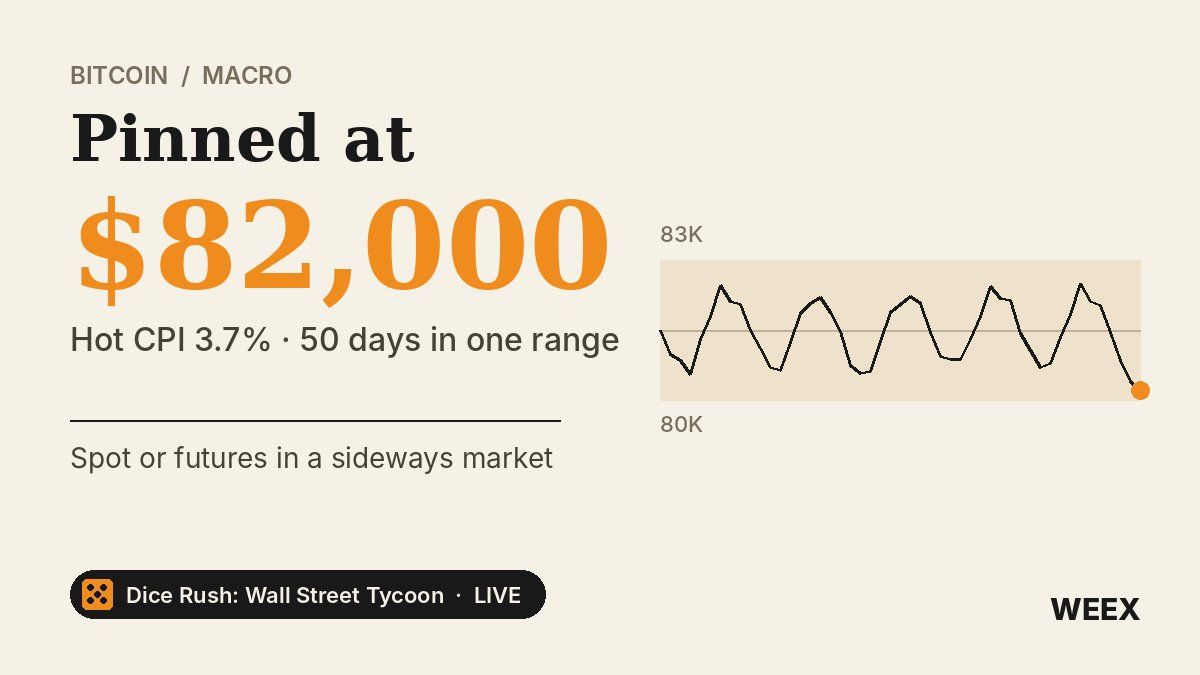
Bitcoin Price After Hot CPI: Why BTC Is Pinned Near $82,000
Sandisk Stock After a 524% Run: Why SNDK Keeps Sliding Now
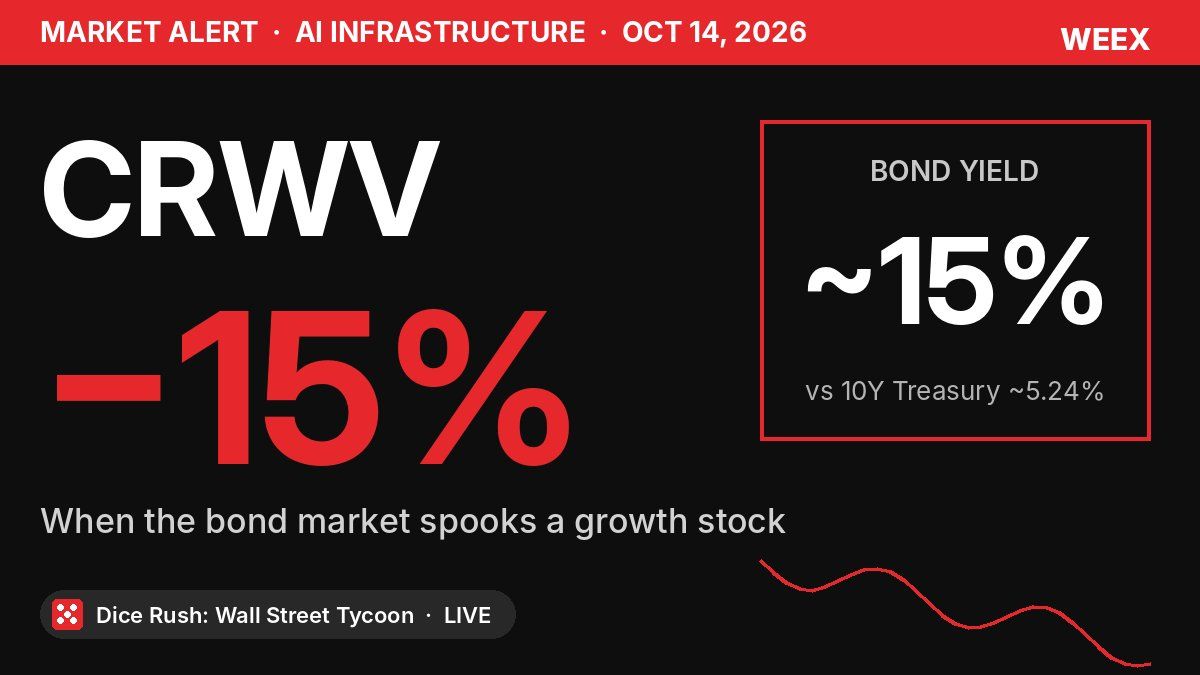
CoreWeave Stock Plunges 15%: Why a Bond Yield Spooked CRWV
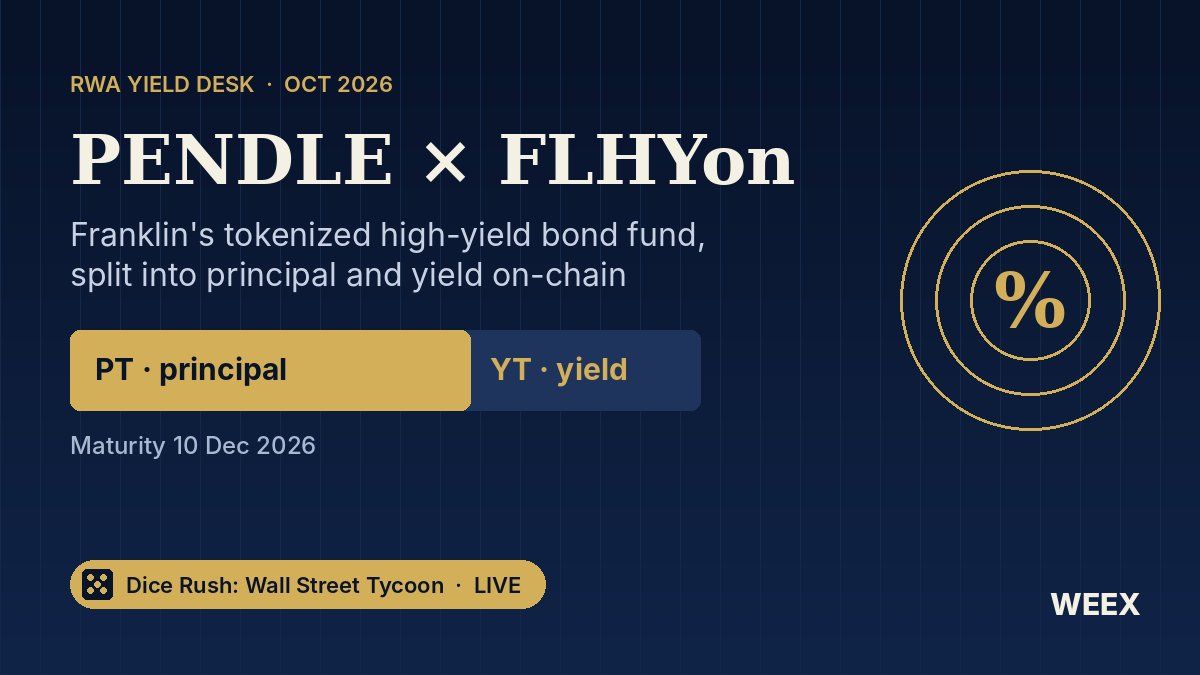
PENDLE Price and FLHYon: What Franklin's Bond Token Changes
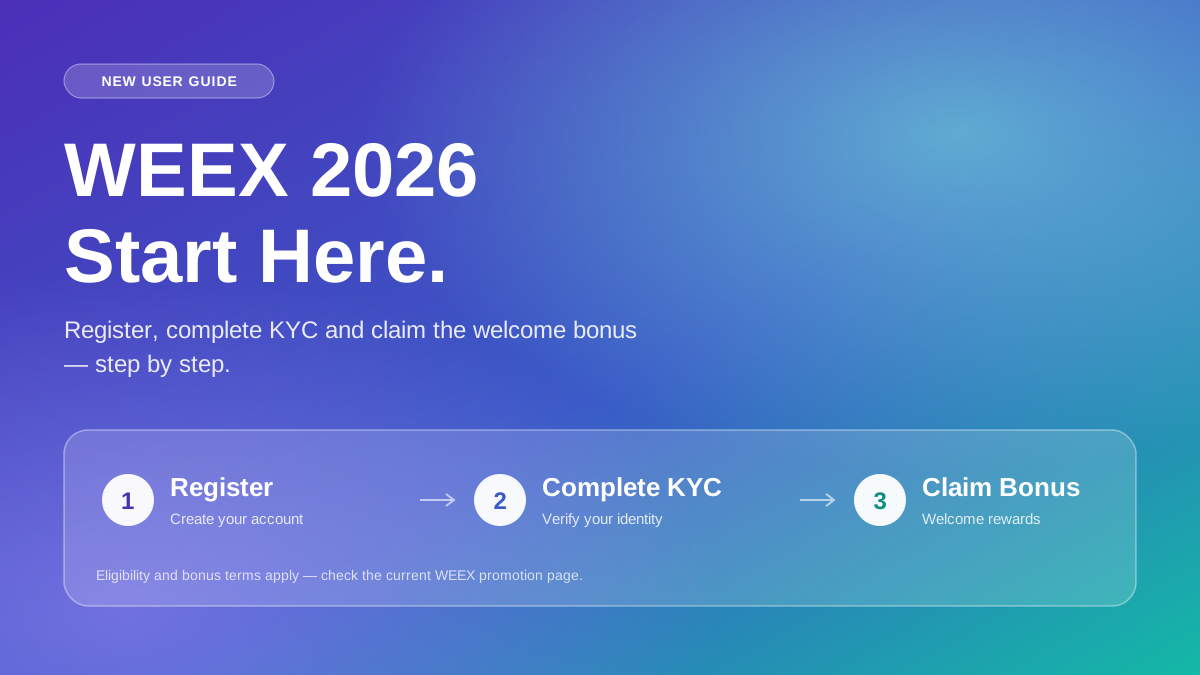
WEEX 2026 New User Guide: Register, Complete KYC, and Claim the Welcome Bonus (Step-by-Step)

WEEX Convert Guide: How to Swap Crypto on Web and App and What the Quote Really Means
ASML Stock Falls Despite a Record Q3 and Higher Outlook: Is the AI Chip Equipment Boom Already Priced In?

SKHY Stock Falls Again: Is the SK Hynix Selloff About China’s CXMT and YMTC or AI Profit-Taking?
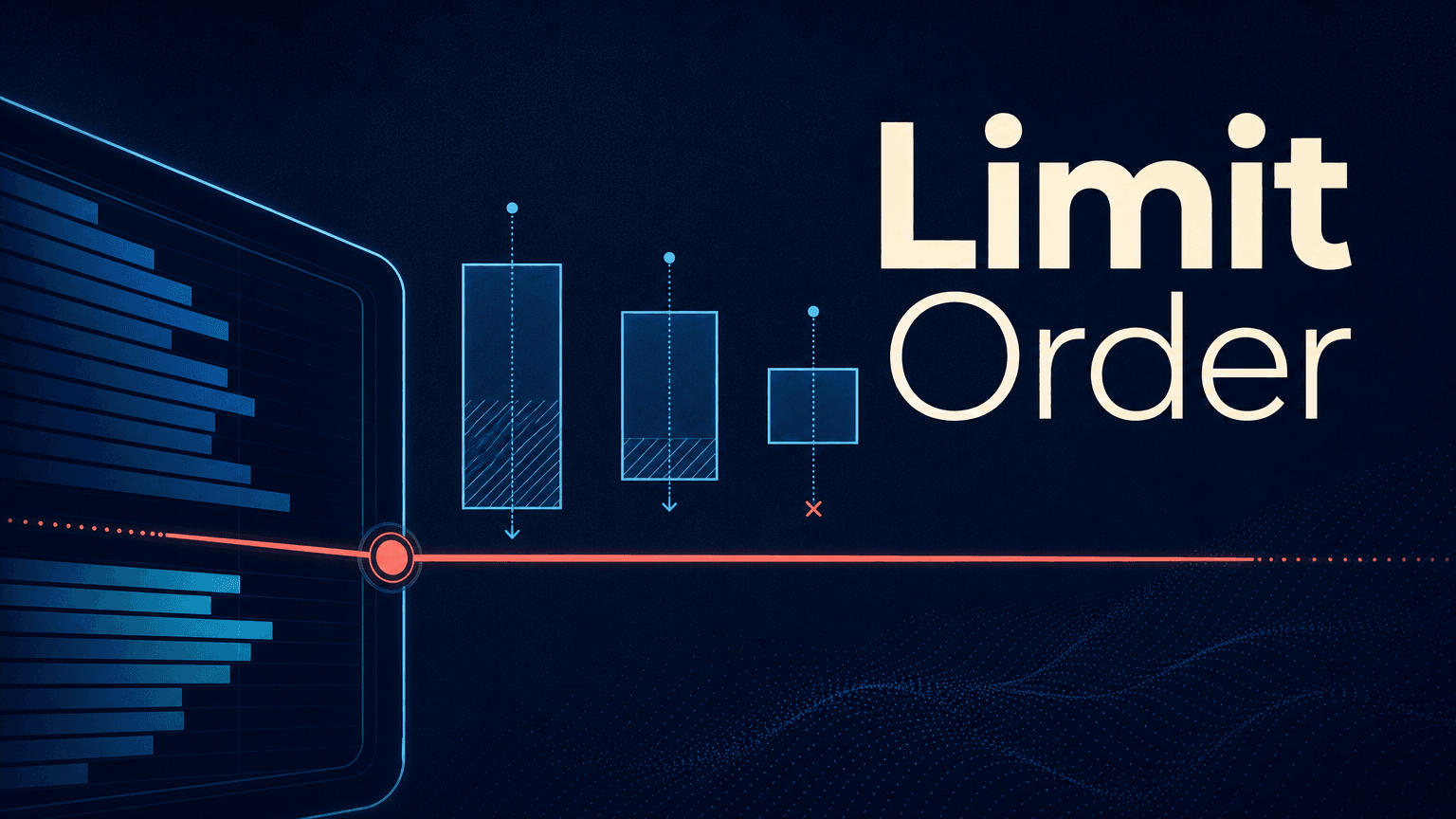
What Is a Limit Order? How It Works and When to Use It
Best Crypto Miner for Beginners: What to Check on Cost, Power, Hashprice and Profit Before You Buy

DeFi Vault vs Staking: Who Controls Your Yield and Your Exit?

Buy Limit Order: How to Buy Crypto Below the Market Price
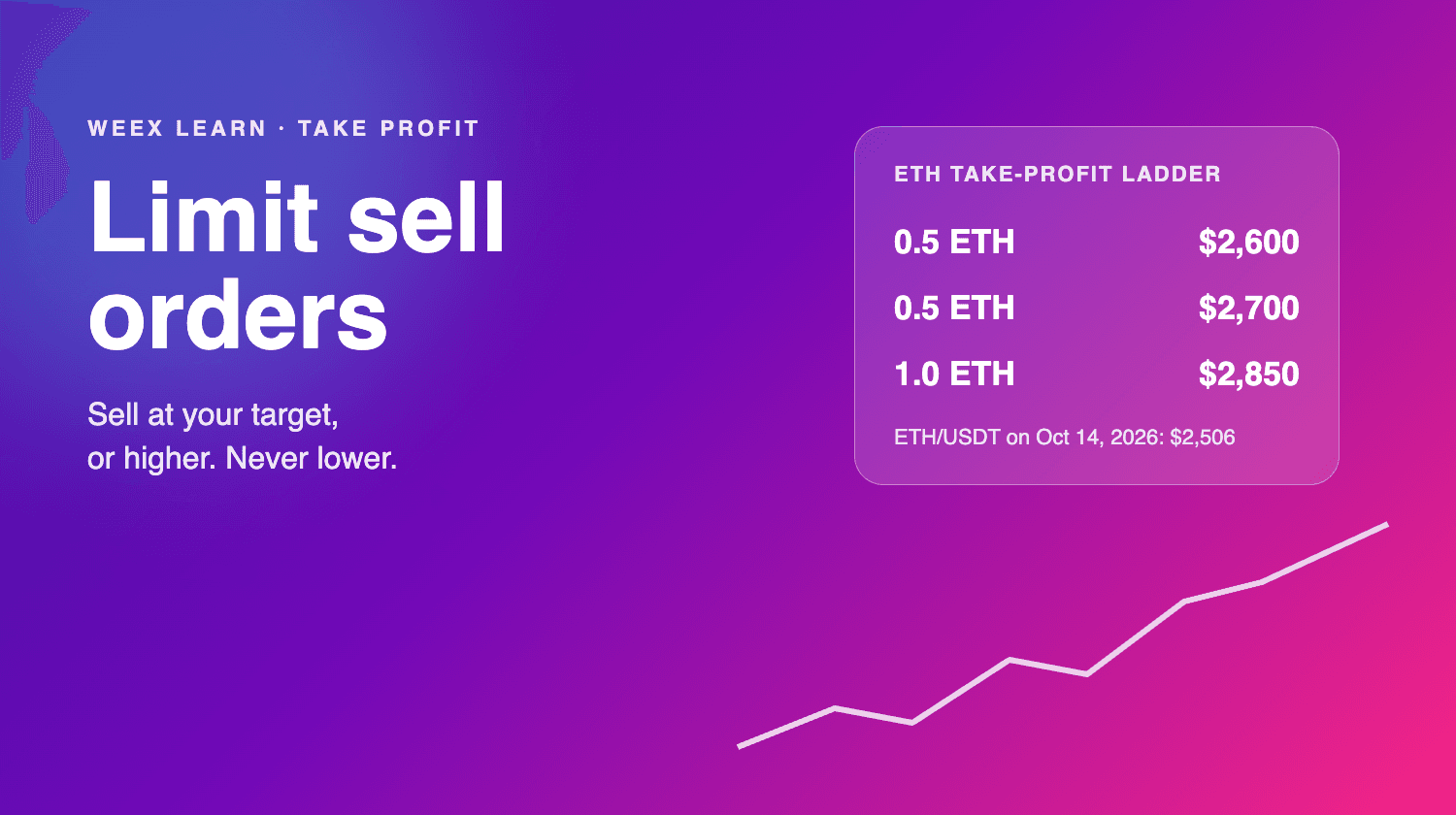
Limit Sell Order: How to Set a Take-Profit Price in Crypto

Limit Order vs Market Order: Which One to Use When Trading Crypto
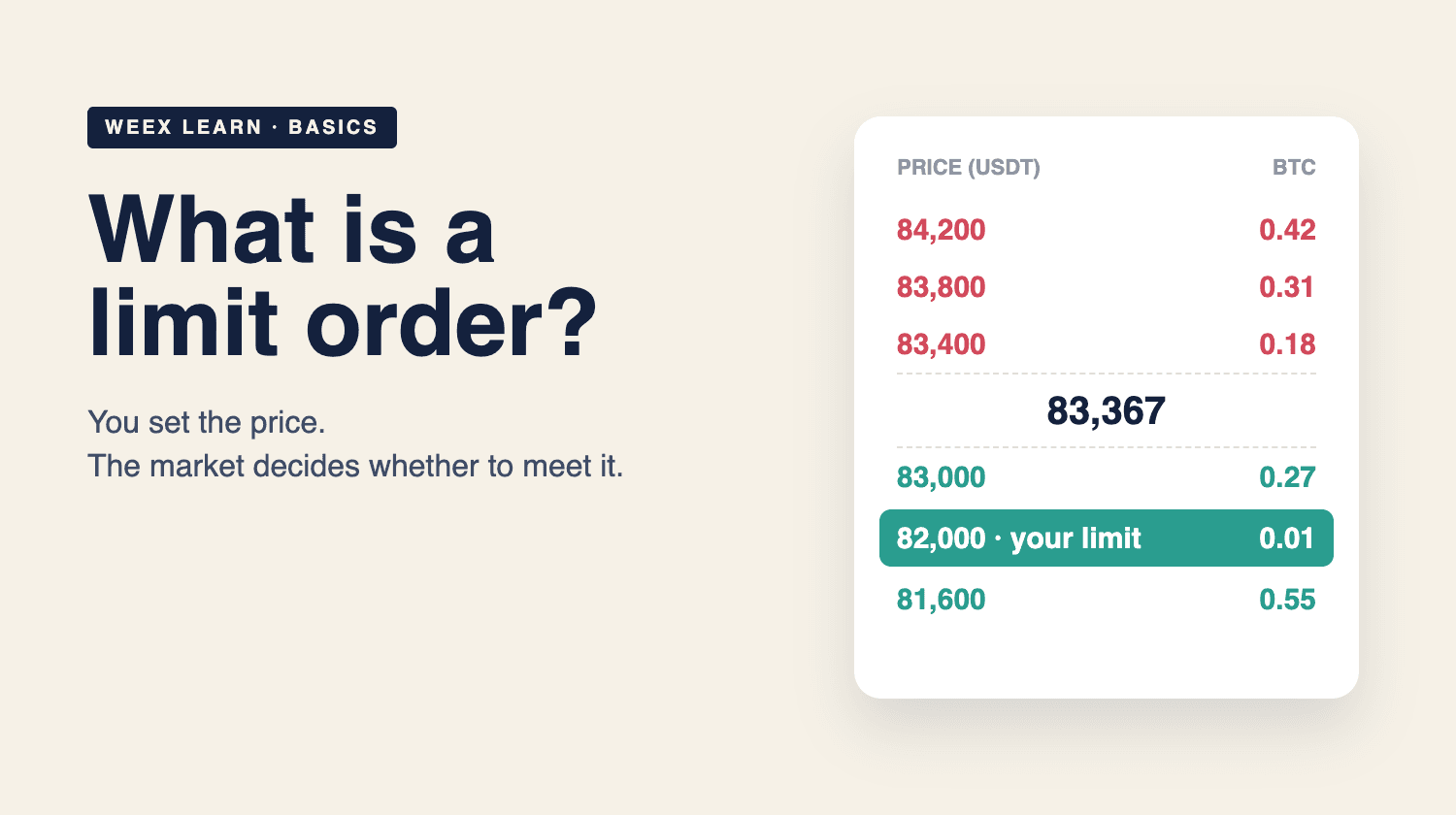
What Is a Limit Order? How It Works in Crypto With BTC Examples
OP Price and Unichain's OP Enterprise Move: What It Means for OP

Nvidia Stock Falls After Microsoft's Maia 300: Is Custom Silicon a Real Threat to NVDA?

SpaceX Stock (SPCX) Near $163: Can It Reclaim $176 After Pivotal Lifts Its Target to $230?

MSFT Stock Near $542: What Azure Maia 300 Actually Claims and What Still Needs Proof
MU Stock Falls Below $1,000: Is the CXMT Threat Real or Just an Excuse to Take Profits?
Can META Reach $1,000? What Wells Fargo, Jefferies and Bernstein Targets Say About Meta Stock

Meta Stock Jumps as Muse AI Retention Data Lands: Is META Pricing In an AI Agent Win?

Stop Limit Order: How It Works and Why It Can Fail to Fill
Best Crypto Platform for Beginners: Pick by Goal, Not Brand

Best Crypto Podcasts for Beginners: A 4-Week Listening Plan
What is Switchboard Protocol (SWTCH) Coin? A 2025 Guide
What Is Walrus Coin (WAL)? Why It Is Rising and What Is Still Unconfirmed
USDC Significant EMT Status in the EU: What Changes on November 12 Under MiCA
APR vs APY in Crypto: Why the Bigger Number Can Mislead You
Walrus (WAL) Jumps 30%: Sui Storage Token Rallies on AI Data
Bitcoin Price After Hot CPI: Why BTC Is Pinned Near $82,000


